
Why Should You Invest In Farm Management Software?
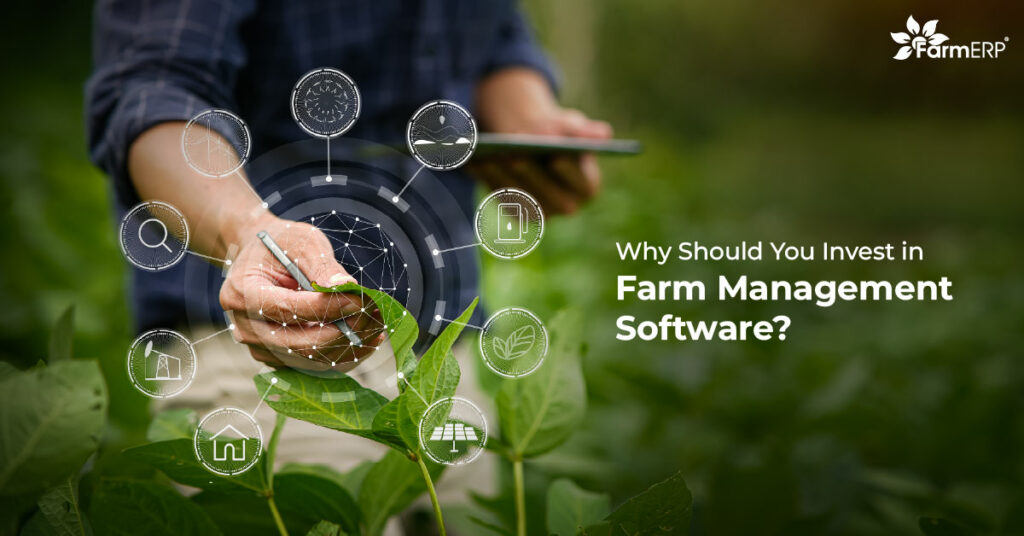
Agribusinesses today operate in an environment shaped by rising input costs, climate uncertainty, labour constraints, and increasing pressure for traceability and compliance. Traditional methods built on spreadsheets, manual reporting, and disconnected tools are no longer sufficient to manage this complexity.
This is where farm management software plays a critical role. By digitising farm operations and converting field data into actionable insights, such platforms help agribusinesses move from reactive decision-making to predictable, data-driven operations. For organisations looking to scale sustainably and improve profitability, the decision to invest in farm management software is becoming a strategic necessity rather than a technology upgrade.
Understanding Farm Management Software
Farm management software is a digital platform designed to centralise and manage agricultural operations across planning, production, labour, quality, inventory, finance, and supply chains. It provides real-time visibility into farm and post-harvest activities while enabling better coordination between teams, locations, and stakeholders.
Modern platforms go beyond basic record-keeping. They integrate analytics, mobile data capture, traceability, and predictive insights to support informed decision-making across the entire agribusiness lifecycle.
Why Investing In Farm Management Software Makes Sense
1. Improved Decision-Making Through Data Insights
Agriculture generates large volumes of operational data, but without the right tools, much of this data remains underutilised. Farm management software consolidates field, production, and financial data into a single system, enabling businesses to analyse performance trends, identify risks, and plan proactively.
With access to real-time dashboards and historical insights, decision-makers can move away from assumptions and intuition and base decisions on accurate, up-to-date information.
2. Increased Operational Efficiency And Productivity
Manual processes often lead to delays, duplication, and errors. Digitising operations improves efficiency by streamlining workflows and reducing dependency on paperwork.
Farm management software enables:
- Faster data capture from the field through mobile applications
- Standardised workflows across teams and locations
- Improved coordination between farming, processing, and logistics operations
As a result, teams spend less time managing data and more time focusing on execution and optimisation.
3. Cost Savings And Better Resource Allocation
One of the strongest drivers to invest in farm management software is cost control. By tracking inputs such as labour, materials, inventory, and machinery usage, businesses gain visibility into where resources are being consumed and where inefficiencies exist.
This transparency helps organisations:
- Reduce wastage and idle labour time
- Optimise input usage and procurement planning
- Control operational costs across multiple locations and crops
Over time, these efficiencies contribute directly to improved margins and financial stability.
4. Higher ROI And Long-Term Sustainability
The ROI of farm management software is realised not through a single feature, but through cumulative operational improvements. Better planning, reduced losses, improved compliance, and optimised labour usage all contribute to measurable returns.
Beyond financial ROI, these platforms support long-term sustainability by promoting responsible resource use, improved traceability, and compliance with regulatory and market requirements. This combination of profitability and sustainability positions agribusinesses for long-term growth.
Additional Benefits Beyond ROI
While financial returns are important, farm management software delivers several strategic benefits that extend beyond immediate ROI:
- Traceability and compliance: End-to-end tracking from field to dispatch supports food safety, certification, and export readiness
- Scalability: Digital systems allow businesses to grow across crops, locations, and markets without losing control
- Risk management: Early visibility into operational issues helps mitigate production, quality, and supply chain risks
- Data continuity: Organisational knowledge is retained within the system rather than being dependent on individuals
These benefits strengthen operational resilience in an increasingly volatile agri-business environment.
How To Evaluate The Right Farm Management Software
Choosing the right platform requires a clear understanding of business needs. When evaluating farm management software, organisations should consider:
- Coverage across the entire agribusiness value chain
- Ability to support multiple crops, locations, and entities
- Mobile and offline data capture capabilities
- Integration with finance, quality, and export workflows
- Scalability and long-term product roadmap
A platform like FarmERP is designed to address these requirements through an integrated ecosystem that supports farming, processing, exports, and farmer management within a single system.
Overcoming Common Misconceptions About Farm Software Investment
A common misconception is that farm management software is only suitable for large enterprises. In reality, digital platforms deliver value across mid-sized and growing agribusinesses by improving control and visibility early in the growth cycle.
Another concern is implementation complexity. While adopting new systems requires change management, modern platforms are designed for gradual adoption, mobile-first usage, and role-based access, making the transition manageable when approached strategically.
Conclusion
To invest in farm management software is to invest in clarity, control, and future readiness. As agriculture becomes more data-driven and globally interconnected, digital platforms are essential for managing complexity and sustaining growth.
By improving decision-making, optimising resources, and strengthening operational resilience, farm management software delivers both measurable ROI and long-term strategic value. For agri and fresh produce businesses focused on scalability, sustainability, and profitability, the investment is no longer optional but foundational.
FAQs On Investing In Farm Management Software
Is farm management software suitable for all types of agribusinesses?
Yes, modern platforms are designed to support diverse operations, from farming and processing to exports and controlled-environment agriculture.
How long does it take to see ROI?
Most businesses begin to see operational improvements within the first season, with financial ROI improving as adoption deepens.
Does farm management software replace agronomy expertise?
No. It enhances decision-making by supporting experts with accurate data and actionable insights.