
How Digital Crop Cycle Planning Improves Consistency in Controlled Farming
Summary
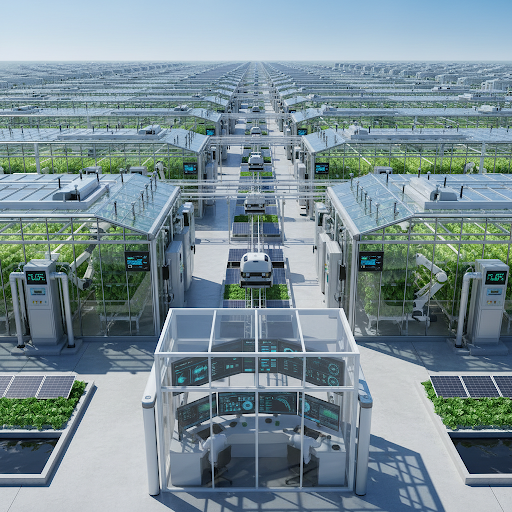
Controlled farming environments; such as greenhouses, hydroponics, and precision agriculture setups are designed to minimize uncertainty. Yet, even in controlled conditions, achieving consistent output remains a challenge. Variations in planting schedules, nutrient application, labour execution, and environmental adjustments can lead to uneven crop quality and fluctuating yields.
Digital crop cycle planning brings structure, predictability, and repeatability to these operations. By mapping every stage of the crop lifecycle in advance and aligning it with real-time field data, agribusinesses can eliminate guesswork and ensure consistent outcomes across cycles. FarmERP’s advanced crop planning capabilities enable growers to standardize production while maintaining flexibility for real-time adjustments.
1. The Challenge of Consistency in Controlled Farming
Controlled farming aims to reduce variability, but several operational gaps still persist:
- Inconsistent planting schedules
- Variation in nutrient and irrigation timing
- Dependence on individual operator decisions
- Lack of structured planning across cycles
Even small inconsistencies in these areas can result in uneven growth, affecting quality, yield, and market value. Without structured planning, controlled environments still behave unpredictably.
2. What Digital Crop Cycle Planning Means
Digital crop cycle planning involves creating a structured, technology-driven schedule for every stage of crop growth, including:
- Sowing or transplanting dates
- Nutrient and irrigation schedules
- Growth milestones and checkpoints
- Harvest timelines
These plans are built into a digital system and aligned with real-time execution, ensuring that all activities follow a predefined and optimized cycle.
3. Why Crop Cycle Planning Is Critical for Uniform Output
Consistency in farming is not achieved by controlling one factor it requires alignment across all variables.
A well-defined crop cycle ensures:
- Uniform plant maturity across batches
- Predictable harvesting windows
- Balanced resource usage
- Consistent product quality
Without structured planning, each cycle becomes an independent effort, increasing variability and reducing predictability.
4. How Digital Planning Improves Consistency
A. Standardized Crop Timelines
Digital planning ensures that every crop follows a clearly defined timeline from planting to harvest.
This eliminates variability caused by delayed or early activities, ensuring that batches mature consistently and meet expected quality parameters.
B. Synchronization of Inputs & Activities
Inputs such as water, nutrients, and labour activities are aligned with specific stages of the crop cycle.
This ensures that each plant receives the right input at the right time, preventing under or over application that can affect growth uniformity.
C. Better Control Over Growth Stages
Each stage germination, vegetative growth, flowering, and maturation is tracked and monitored digitally.
This helps managers intervene at the right moment and ensures that plants progress uniformly through each stage.
D. Reduced Dependency on Manual Decisions
In traditional systems, outcomes depend heavily on individual experience and judgment.
Digital planning reduces this dependency by standardizing processes, ensuring that operations are guided by data and predefined protocols rather than individual variation.
E. Repeatable Best Practices Across Cycles
Once an optimal crop cycle is defined, it can be reused and refined over multiple cycles.
This creates a system of continuous improvement where best-performing practices are repeated, leading to consistent yield and quality over time.
5. How FarmERP Supports Digital Crop Planning
FarmERP enables structured crop cycle planning through:
Predefined Crop Plans
Standardized templates for different crops and farming methods.
Activity Scheduling & Tracking
All tasks from planting to harvesting are scheduled and monitored digitally.
Integration with Labour & Input Management
Ensures that resources are aligned with planned activities.
Real-Time Monitoring of Crop Progress
Managers can track actual progress against planned cycles.
Data-Driven Optimization
Historical data is used to refine future crop cycles for better performance.
6. Business Impact for Controlled Farming Operations
Digital crop cycle planning delivers measurable improvements:
- Consistent crop quality across batches
- Improved yield predictability
- Optimized resource utilization
- Reduced operational variability
- Better planning for market demand and supply
It transforms controlled farming from reactive execution to predictive management.
7. Conclusion
Consistency in controlled farming is not achieved by infrastructure alone; it requires disciplined planning and execution. Digital crop cycle planning provides the framework needed to standardize operations, reduce variability, and deliver predictable outcomes.
With FarmERP, growers can design, execute, and optimize crop cycles with precision, ensuring that every cycle performs as expected.
Looking to improve consistency and predictability in your controlled farming operations? Explore FarmERP’s crop planning solutions at farmerp.com and take control of your crop cycles.