
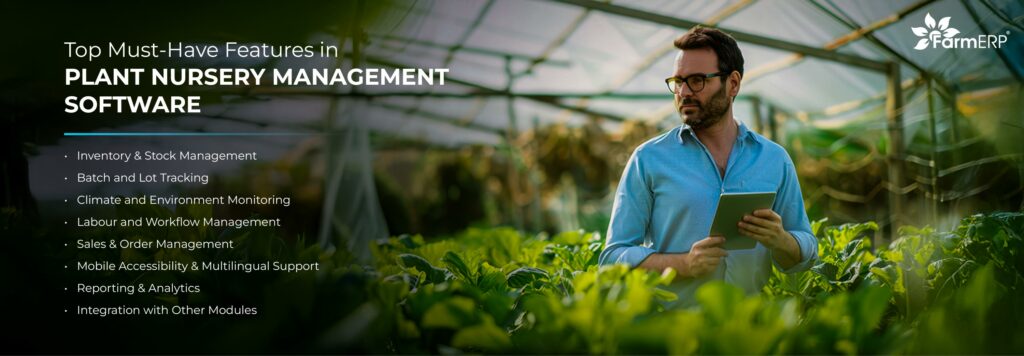
Top Must-Have Features in Plant Nursery Management Software
Did you know? Labor shortages and manual processes are costing plant nurseries time and money. In fact, according to Business Plans, effective inventory control can cut plant spoilage by up to 25%, yet many nurseries still rely on pen-and-paper tracking.
To stay competitive, modern growers are turning to digital nursery tracking systems that streamline operations. This article highlights the top must-have features in plant nursery management software, from inventory and orders to automation, and how these tools deliver outcomes like traceability, reduced labor, and better customer service.
Digital transformation in agriculture is reshaping how plant nurseries operate. Manual record-keeping and fragmented processes lead to errors, delays, and lost revenue. Modern plant nursery management software offers a centralized, automated solution, bringing traceability, resource optimisation, and climate-smart capabilities to every aspect of nursery operations.
What Is a Nursery Management System?
A nursery management system is a specialised digital platform designed to handle all aspects of plant nursery operations.
- Tracks seedling batches and growth stages
- Monitors environmental conditions
- Manages inventory, orders, and sales
- Provides real-time reporting and analytics
To learn more about how nursery management systems work.
Why You Need the Best Nursery Management Software
Nursery managers face challenges such as:
- Manual errors in stock counts and scheduling
- Difficulty ensuring traceability from seed to sale
- Resource waste due to inefficient water, fertiliser, and labour use
- Inability to adapt quickly to weather or market changes
By adopting the best nursery management software, you gain:
- Full traceability and quality control
- Automated resource planning and usage alerts
- Climate-adaptive workflows and alerts
- Scalable cloud-based access for multi-site operations
At McCorkle Nurseries in Georgia, USA, switching from timer-based irrigation to a smart sensor-based system led to an 83% reduction in water usage, all without compromising plant quality. The nursery drastically cut resource waste and improved operational efficiency by integrating automated irrigation planning through software.
Click here to learn more about how nursery management systems are confronting challenges in nursery operations.
Top Features Every Nursery Management System Should Have
1. Inventory & Stock Management
A powerful nursery system does more than count pots—it tracks soil mixes, labels, packaging materials, and consumables alongside live plant stock. You can set low-stock alerts for critical items, generate purchase orders automatically, and view current inventory levels by location or greenhouse zone. This avoids last-minute shortages and helps plan cash flow.
2. Batch and Lot Tracking
Instead of lumping all seedlings together, record tray-by-tray or tree-by-tree details: planting date, variety, greenhouse zone, and even custom care instructions. When a pest issue or quality concern arises, you can isolate the affected lot immediately, minimising losses and meeting strict food safety and traceability requirements.
3. Climate and Environment Monitoring
Integrate with IoT sensors to continuously measure humidity, temperature, soil moisture, and light levels. Dashboards show you at a glance where heat stress or drought risk is high. Automated alerts prompt corrective actions, like adjusting misting systems or moving shade cloths, before your crops suffer.
4. Labour and Workflow Management
Assign daily tasks—pruning, transplanting, bench rotations—directly in the system. Track who completed what and when, and identify bottlenecks in real time. Historical labour data helps you forecast staffing needs for peak seasons, reducing overtime costs and ensuring on-time deliveries.
5. Sales & Order Management
From wholesale tree lots to retail bedding plants, manage customer quotes, order confirmations, and invoicing in one place. Integration with your e-commerce portal or B2B portal ensures orders flow straight into production schedules, minimising manual re-entry and speeding up fulfilment.
6. Mobile Accessibility & Multilingual Support
Field teams can use smartphones or tablets to scan QR-coded trays, record observations, and update grafting or fertilisation records on the spot. Local-language interfaces boost adoption in multilingual workforces, ensuring data consistency across regions.
7. Reporting & Analytics
Real-time dashboards synthesise key metrics—germination rates, inventory turnover, labour efficiency—into intuitive charts. You can drill down on batch performance, sales trends, and waste hotspots, enabling continuous improvement and data-backed strategic planning.
8. Integration with Other Modules
A nursery doesn’t operate in isolation. Seamlessly connect to your core ERP, CRM, POS, and export modules to share data across finance, supply chain, and customer service. This unified ecosystem eliminates duplicate data entry and delivers a single source of truth for your entire agribusiness.
9. User Roles & Data Security
Define custom access rights so that managers, field staff, and finance teams see only what’s relevant to them. Role-based permissions and encrypted data storage protect sensitive business information and ensure compliance with industry standards.
Choosing the Best Nursery Management Software
When evaluating vendors, ask about:
- Functionality Fit: Does it cover your specific workflows(e.g., propagation, shading, phenotyping)?
- Cloud & Mobile Access: Can teams in the field and office collaborate in real time?
- Scalability & Support: Will it grow with your operations,and is vendor support responsive?
- Integration Capabilities: Does it link easily with your existing systems?
Conclusion
Plant nurseries that adopt a modern, climate-smart nursery management system position themselves for long-term success. You can transform your operations into a highly efficient, data-driven enterprise by focusing on traceability, resource optimisation, and user-friendly interfaces.
Ready to optimize your nursery?
Explore NurseryOps10X and Schedule a Demo.
FAQs
What is the nursery management system?
A digital tool to manage plant stock, environmental controls, labour schedules, and customer orders within a nursery.
What are the objectives of nursery management?
To optimize plant growth, boost operational efficiency, maintain end-to-end traceability, and improve profitability.
What are the components of nursery management?
Key components include inventory tracking, plant care scheduling, climate monitoring, workforce management, and order processing.