
Top 10 Best Practices For Fresh Fruits and Vegetables Supply Chain Management
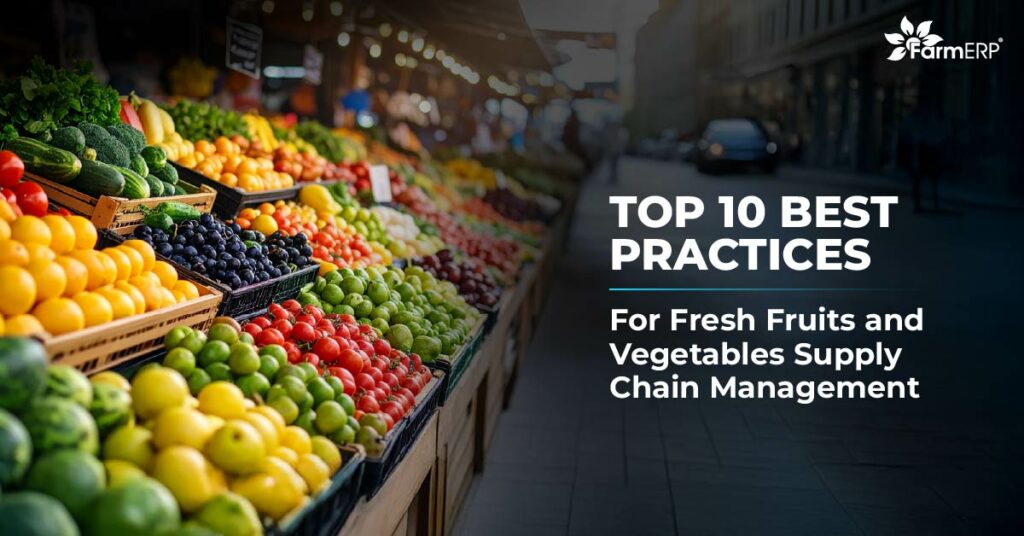
For large agribusinesses, the challenge extends beyond producing quality fruits and vegetables; it is ensuring they consistently reach markets in peak condition. The financial impact of inefficiencies is massive.
According to WRI India, post-harvest losses in 2020–21 were valued at ₹1,52,790 crore (US$18.5 billion). Fruits and vegetables alone accounted for 37% of this loss, underscoring the vulnerability of fresh produce supply chains across India’s agricultural sector. In a business where margins are tight and freshness is non-negotiable, resilient supply chains are essential for protecting profitability and growth.
Here are 10 best practices to streamline and strengthen your fruit and vegetable supply chain.
1. Farm-to-Market Traceability
Traceability is now a defining standard for the fresh produce industry because modern buyers demand complete transparency about food origins. By implementing digital systems, agribusinesses can track the movement from cultivation fields through to the consumer’s plate with confidence. Such systems reduce the risk of recalls, ensure accountability across multiple stakeholders, and strengthen brand reputation in competitive fresh produce markets.
2. Cold Chain Integration
Temperature management is critical because fruits and vegetables deteriorate rapidly without a properly integrated cold chain infrastructure across the supply process. A seamless combination of cold storage facilities, refrigerated transport vehicles, and advanced monitoring technology helps maintain nutritional quality. Real-time monitoring and data-driven adjustments within the cold chain minimise spoilage, preserve freshness, and ensure consistent quality at retail destinations.
3. Quality Grading & Sorting
Efficient grading and sorting systems significantly improve the vegetable supply chain by categorising produce based on ripeness, size, and visual appeal. Automation eliminates human error, maintains consistency, and aligns output with specific market segments and consumer preferences. By ensuring uniform quality standards, agribusinesses can command better prices and strengthen buyer confidence in their fresh produce offerings.
4. Packaging Innovations
Packaging today is more about functionality than presentation, as it directly impacts product freshness and post-harvest shelf life.
Innovations like modified atmosphere packaging, eco-friendly materials, and QR-enabled smart labels are reshaping fresh produce logistics worldwide. Such packaging reduces wastage, improves traceability, and enhances consumer trust, making it a valuable contributor to long-term supply chain efficiency.
5. Inventory & Batch Management
Batch-wise inventory management helps agribusinesses avoid losses by tracking produce movements, monitoring shelf life, and reducing stock bottlenecks. ERP-driven systems allow producers to maintain full visibility over warehouse utilisation, stock levels, and expiry timelines in real time. This enables leaner, more profitable operations while maintaining quality and compliance across the entire fresh produce distribution network.
6. Demand Forecasting & Planning
Accurate forecasting prevents costly imbalances, since overproduction leads to wastage while underproduction creates missed market opportunities. By analysing historic consumption trends, weather patterns, and regional demands, businesses can align production with actual market needs. Data-driven planning ensures consistent returns, reduces uncertainty, and helps agribusinesses adapt quickly to shifting consumer demand cycles.
7. Digital Platforms & Mobile Monitoring
The role of digital platforms in vegetable supply chain management is growing because real-time insights are critical for decision-making. Mobile dashboards and applications provide instant updates about harvest schedules, logistics routes, and in-field quality checks. This accessibility allows field teams to respond faster to unexpected disruptions, maintaining reliability and efficiency across large operations.
8. Supplier & Vendor Collaboration
Strong collaboration with suppliers and vendors ensures stability across complex supply networks that span multiple regions and markets.
Shared digital platforms foster transparency, enable collaborative planning, and streamline communication across all participating stakeholders. This collaborative approach reduces delays, strengthens operational resilience, and safeguards businesses against sudden logistical bottlenecks or supply fluctuations.
9. Compliance with Food Safety Standards
Compliance is a fundamental requirement, not an option, in an industry where consumer health and global trust are at stake. Standards like GLOBALG.A.P., ISO certifications, and regional food safety laws help businesses establish credibility with buyers.
Embedding such compliance measures directly into operational processes prevents legal complications and strengthens long-term brand reputation.
10. Role of FarmERP: NurseryOps10X For Supply Chain Optimization
At FarmERP, we understand that fresh produce supply chains need more than manual oversight; they need intelligence. Our NurseryOps10X platform is designed to empower agribusinesses with complete control and visibility, right from seedling production to market delivery. Our agritech solutions help businesses eliminate inefficiencies, reduce post-harvest losses, and respond proactively to market demand.
Bottom Line
For agribusinesses and industrial-scale producers, managing a fruit and vegetable supply chain efficiently is no longer an option; it is critical to survival and growth.
At FarmERP, we partner with global agri-enterprises to implement best practices while digitising their entire supply chain with our intelligent ERP platform solutions. The result: reduced wastage, higher quality consistency, better compliance, and improved profitability across the value chain.
If your agribusiness is ready to transform its fresh produce supply chain, FarmERP is here to help you achieve it.
Let’s make your supply chain truly future-ready.